The Trump Administration Officially Ends SAVE Program and Weaponizes Student-Loan Debt Against Young People
This is debt as a weapon, used to destabilize, control, and economically break a generation before it can organize, build wealth, or resist.

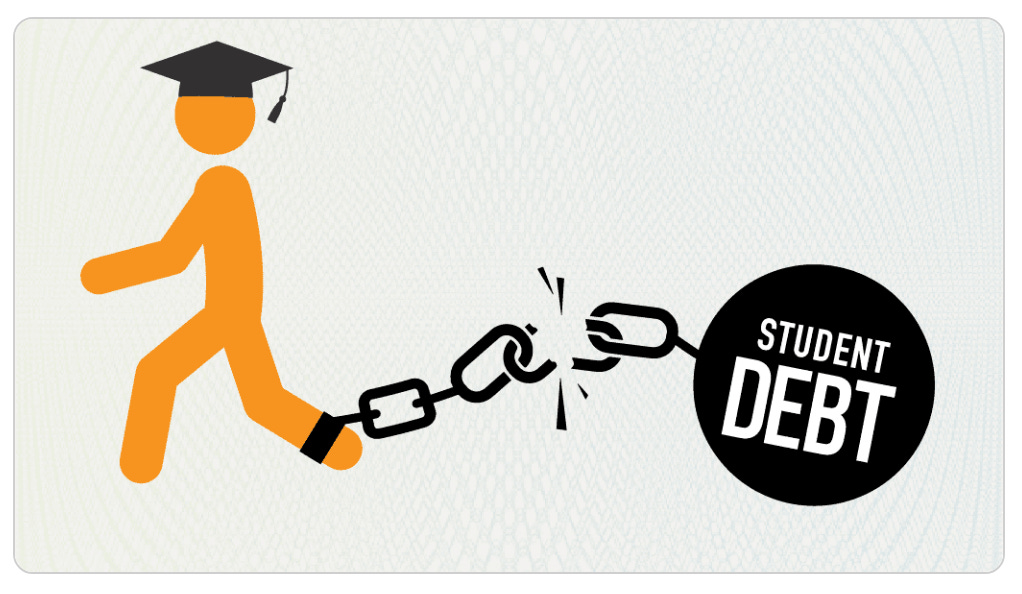
Former President Joe Biden‘s signature student loan repayment plan has officially been dismantled.
With little fanfare, the Trump administration announced yesterday that it would end the SAVE program, eliminating a key source of relief for millions of borrowers whose balances were finally stabilizing after years of compounding interest. At the same time, officials have moved to cap federal loans, which is redesigning who can afford college and who will be punished for having gone in the first place.
Seen together, these changes form a closed economic circuit that will block access to higher education on the front end, then tighten the vice on those already inside the system. The result is not efficiency or savings, but an enforced scarcity that falls hardest on Black and brown borrowers who borrow more, earn less after graduation, and repay longer.
So debt, once again, has become a policy muscle and a form of social control for this cruel administration. They claim these changes are about reform. But it’s really economic warfare, carried out by narrowing the future while pretending it’s about the law.
Let me break down what this latest move means.
What this means immediately is that you cannot sign up for the SAVE program anymore, and if you were in the middle of applying, that application is dead. If you were already enrolled, the government will move you into a different repayment plan that follows older rules that are generally less generous.
SAVE mattered because it lowered monthly payments in a way no other plan really did. For many low-income borrowers, payments were zero or close to it, and balances stopped ballooning from runaway interest. It also promised a clearer, faster path to forgiveness. Ending it doesn’t just take away “relief,” it takes away predictability. Borrowers who had finally been able to budget, breathe, and plan now have to brace for change without knowing exactly how bad it will be.
For a lot of people, the first real impact will be higher monthly bills. The replacement plans often calculate payments differently, meaning what you owe each month can jump, sometimes significantly, depending on income and loan size. That might not sound catastrophic on paper, but for people already juggling rent, groceries, childcare, medical bills, or unstable work, even a modest increase can push budgets into the red.
Debt will also become harder to manage emotionally and financially. SAVE was designed to keep payments manageable during lean years. Taking that away doesn’t make borrowers suddenly earn more money, it just makes the math harsher. We’re gonna see folks dealing with more stress, more missed payments, and more people forced to choose between student loans and basic necessities.
There’s also confusion baked into this.
Millions of borrowers were either enrolled in SAVE or counting on it. Now they’re expected to choose a new plan, quickly and correctly, inside a system that already has a long history of bad servicing, misinformation, and paperwork errors. Miss a deadline, misunderstand your options, or assume you’re covered when you’re not, and you could face late fees, damaged credit, or even default.
It’s also important to note that interest is already ticking again. Because SAVE was tangled up in court challenges, many borrowers were temporarily shielded by forbearance. That protection is gone. Even people who haven’t figured out their new repayment plan yet are watching their balances climb in real time.
Long-term, this closes off one of the few realistic paths many borrowers had toward forgiveness. Without SAVE, fewer people will ever see their loans discharged, especially those with lower incomes or unstable careers. That translates directly into longer repayment periods, more interest paid over a lifetime, and less room to build wealth.
It also raises the risk of default. When payments rise and safety nets disappear, more people fall behind. Default comes with severe consequences like wage garnishment, seized tax refunds, and wrecked credit that can follow borrowers for years. This disproportionately harms people already economically vulnerable.
The inequality gap widens too. Borrowers from wealthier backgrounds can absorb increases, get family help, or refinance privately. Borrowers from low- and middle-income families, especially Black and brown graduates who tend to borrow more and earn less after college, don’t have those cushions. The same degree becomes a heavier punishment depending on who you are.
This constant whiplash makes it nearly impossible to plan a life. When loan rules keep changing, people delay buying homes, starting families, changing jobs, or going back to school. Uncertainty becomes the policy outcome. And for millions of borrowers, that uncertainty is now the norm.
I’ve been troubled about the seeming lack of outrage. There should be more outrage. But the fact that there isn’t more of it is part of how this kind of economic harm has been able to move forward so easily.
One reason is exhaustion.
Student loan borrowers have been yanked back and forth for more than a decade. They’ve seen promises made, relief announced, lawsuits filed, programs paused, restarted, and then quietly killed. That constant instability wears folks down. When you’ve been told over and over that relief is coming and then watched it evaporate, many people stop reacting loudly and switch into survival mode. Silence often is emotional depletion.
Another reason is how deliberately bureaucratic this move has been framed. Ending SAVE wasn’t announced with a dramatic press conference or bold language. It was packed into technical explanations, legal justifications, and administrative process. That’s not an accident. Bureaucracy dulls moral clarity. When harm is delivered through acronyms, court rulings, and repayment-plan jargon, it’s harder for people to immediately recognize it as violence instead of paperwork.
There’s also fragmentation. Borrowers are not a neat political bloc. Some people had loans forgiven earlier. Some never qualified for SAVE. Some are confused about whether this affects them yet. Others assume it will get reversed again. That uncertainty splinters collective anger. It’s hard to organize outrage when people don’t know where they stand, or whether they’ll be next.
Race plays a role, too, even when it’s not named. Policies that disproportionately harm Black and brown folks rarely trigger the same level of national alarm as policies that visibly harm wealthy or politically powerful groups. Student debt has been quietly racialized for years. When relief is stripped away from populations already expected to “figure it out,” the suffering gets normalized instead of scandalized.
Media incentives matter as well. Student loan policy is treated as niche, boring, or overly complex compared to elections, crime, or spectacle-driven outrage. There’s no viral image the way there is with abortion bans or police violence. Debt harm is slow, cumulative, and private. It happens in bank accounts, inboxes, and kitchens—not on camera. That makes it easier for newsrooms to underplay the stakes.
And finally, there’s fear. A lot of young people know—intuitively—that pushing too hard comes with consequences: professional risk, political backlash, being labeled irresponsible or entitled. Debt is already a disciplining force. It doesn’t just drain money, it suppresses voice. People who are financially constrained are less likely to stick their necks out if they think it might cost them a job, a reference, or stability.
So the quiet isn’t confusion. It’s fatigue, fragmentation, bureaucratic fog, racial normalization, weak media urgency, and a system that teaches people very effectively that outrage is costly. That’s not a failure of borrowers. It’s evidence of how well the economic warfare is working.
At the end of the day, this isn’t a neutral policy adjustment. It’s a direct assault on young people. Killing a plan like SAVE, is re-weaponizing debt against the very populations higher education has historically extracted from without fully rewarding.
What the Trump administration is really doing here is reasserting debt as a form of social control. Student loans are not just about repayment. They dictate who can take risks, who can leave abusive jobs, who can afford to organize, strike, move, buy homes, start families, or say no. When relief is stripped away, young people remain trapped, economically anxious, politically cautious, and structurally dependent. For Black and brown graduates especially, this compounds an already racialized debt regime that ensures higher education functions less as mobility and more as indenture.
This is economic warfare dressed up as fiscal responsibility. Trump’s approach consistently targets the future, which includes students, borrowers, workers not yet locked into wealth, while protecting capital, inheritance, and corporate power. By forcing loan balances to grow again and payments to spike, the administration is shrinking the economic horizon of an entire generation.
Less breathing room means less organizing, less dissent, less experimentation, and less freedom. Debt becomes the leash.
And it fits perfectly with a broader white supremacist strategy. Undermine public education. Discredit expertise. Punish young people who believed the promise that degrees are a path to stability. Reinforce racial hierarchy by ensuring Black and brown borrowers pay more, longer, and with fewer safety nets. Keep them tired. Keep them scared. Keep them paying. This ain’t about budgets, Y’all. It’s about control, and about deciding who gets a future spacious enough to imagine something better for their lives, their families, and communities.
This is economic warfare across time. It disciplines current borrowers and chills future aspiration. It tells young people don’t dream too big, don’t borrow hope, don’t expect the state to invest in your future.
And the racial logic here that cannot be ignored. Black and brown students were never meant to leverage higher education as a pathway to collective power. When that pathway began to work by producing journalists, lawyers, scholars, organizers, teachers the response wasn’t to celebrate all this achievement and progress. It was retrenchment. Caps, aggressive rollbacks, reform, and “personal responsibility” rhetoric are the soft language of racial triage. Some futures are subsidized while thers are foreclosed.
And finally, this scheme serves a broader economic vision. Trump and his ilk want an America with a large, indebted, underpaid workforce and a small, protected elite insulated from consequence. Cheap labor. Fewer critics. Fewer educated truth-tellers. Fewer people trained to interrogate history, law, finance, and power. Undermining access to education while weaponizing debt after the fact isn’t accidental. It’s how you downgrade democracy without having to say the word.
So the hope is clear: keep young people tired, divided, indebted, and too afraid to imagine more. Because a population struggling to survive doesn’t have the luxury of resisting, and that’s exactly the damn point!
Thanks for reading. If you found this analysis useful and clarifying, please consider becoming a paid subscriber. Your $8 subscription doesn’t just keep this kind of reporting and analysis alive, it directly helps me fund and mentor HBCU journalism students who are learning how to tell hard truths in a hostile media environment. Paid subscriptions help me raise money to buy textbooks, cameras, tripods, mics, software, reporting trips, conference registration, and even food for students. I appreciate your support!